Enter
Keywords
Enter
Keywords

Enter
Keywords
Updated: 06th May 2026

This guide explains health surveillance requirements in construction, common occupational health risks, legal duties, monitoring procedures, and the importance of long-term health records.
Health surveillance is not required for most workers, but in some work situations and for certain hazardous exposures it is required by law.
Construction workers may be exposed to noise, vibration, dusts, fumes, chemicals, asbestos, lead, radiation, and other harmful substances that can damage health over time.
Raising awareness and carrying out health surveillance may help employees identify the early signs of ill health before conditions become serious. Early detection allows employers to make changes that reduce risks and prevent further health deterioration.
Health surveillance is a system of ongoing health checks used to identify work-related ill health at an early stage.
These checks may be legally required for employees who are exposed to hazardous substances, harmful processes, or dangerous working environments.
Health surveillance helps employers:
Health surveillance may be required when workers remain exposed to risks even after all reasonable precautions and control measures have been implemented.
An employer should consider health surveillance if employees are exposed to:
Health surveillance is normally required if the following conditions are met:
Health surveillance should always form part of a wider occupational health management system and should not replace exposure control measures.
Repeated exposure to loud noise from tools, machinery, demolition, and construction activities can cause permanent hearing damage or tinnitus.
Vibrating tools such as grinders, breakers, drills, and sanders can lead to hand-arm vibration syndrome and circulation problems.
Construction dusts such as silica, wood dust, and asbestos fibres can damage the lungs and lead to serious respiratory disease.
Solvents, paints, adhesives, cement, fuels, and other chemicals may cause skin conditions, breathing problems, burns, or long-term illness.
Exposure to lead or asbestos is highly regulated because of the severe long-term health risks associated with these substances.
Specialist construction work involving ionising radiation or compressed air environments may also require formal health surveillance programmes.
In its simplest form, health surveillance may involve employees checking themselves for signs or symptoms of ill health after training on what to look for and who to report concerns to.
For example, employees who work with skin irritants may be trained to look for:
A responsible person may be trained to carry out routine basic checks such as skin inspections or identifying visible symptoms of ill health.
This person could be:
More detailed health surveillance may involve occupational health nurses or occupational health doctors carrying out examinations, questionnaires, hearing tests, lung function tests, or medical assessments.
Certain high-hazard substances or work activities legally require statutory medical surveillance.
Statutory medical surveillance involves medical examinations and tests carried out by a doctor appointed by the Health and Safety Executive.
Health surveillance should never replace proper risk control measures. Employers must first attempt to remove or reduce exposure through safer working methods.
Ventilation systems, extraction equipment, acoustic controls, dust suppression, and vibration reduction equipment should be used wherever possible.
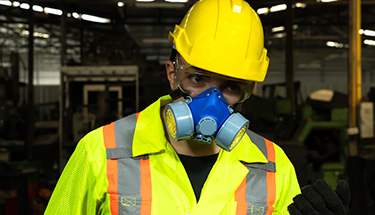
Respiratory protective equipment, hearing protection, gloves, eye protection, and protective clothing may be required depending on the risks involved.
Employees should understand the health risks associated with their work and know how to recognise early warning signs of ill health.
A health record must be kept for all employees who are under health surveillance.
Records are important because they allow links to be identified between workplace exposure and health effects.
Health records, or copies of them, should normally be kept for at least 40 years from the date of the last entry. This is because some occupational illnesses take many years to develop after exposure.
Health surveillance is an important part of occupational health management in construction and other high-risk industries. Workers exposed to noise, vibration, hazardous substances, dusts, fumes, asbestos, radiation, or other harmful agents may require ongoing health checks.
Early identification of health problems can help prevent long-term illness and improve workplace safety. Health surveillance programmes may range from simple self-checks to formal medical examinations carried out by occupational health specialists.
Employers must assess risks, reduce exposure wherever possible, provide suitable control measures, and maintain accurate health records. Workers must cooperate with health surveillance arrangements and report symptoms promptly to help protect their long-term health.
Why Health Surveillance Matters
What Is Health Surveillance?
When Health Surveillance May Be Required
Criteria for Health Surveillance
Common Occupational Health Risks in Construction
Noise Exposure
Hand-Arm Vibration
Dust Exposure
Chemical Exposure
Lead and Asbestos
Radiation and Compressed Air
Types of Health Surveillance
Self-Checks by Employees
Routine Basic Checks
Occupational Health Assessments
Statutory Medical Surveillance
Examples of Health Surveillance Programmes
Control Measures and Prevention
Reduce Exposure First
Use Engineering Controls
Provide Suitable PPE
Provide Training and Information
Record Keeping Requirements
How Long Should Records Be Kept?
What Records May Include
Employer Responsibilities
Worker Responsibilities
Health Surveillance Questions for Toolbox Talks
Conclusion
Want us to call you back?
No problem, let us know your details and we will get back to you ASAP.
What would be the best time to call?
Please note these times are not guaranteed.