Enter
Keywords
Enter
Keywords

Enter
Keywords
Updated: 06th May 2026
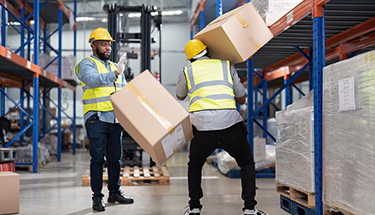
This guide explains the risks associated with manual handling, outlines important considerations before lifting, and covers safe lifting and carrying techniques to reduce workplace injuries.
Every year, a significant proportion of workplace injuries are caused by poor manual handling practices. Incorrect lifting, carrying, pushing, pulling, or moving of loads can lead to serious injuries including strains, sprains, back injuries, trapped fingers, and long-term musculoskeletal disorders.
Many manual handling injuries develop gradually over time due to repeated poor lifting techniques, while others happen suddenly during a single unsafe lift. If manual handling is done incorrectly today, the consequences may affect workers for years afterwards.
Good manual handling practices help reduce injuries, improve safety, and create more efficient workplaces.
Manual handling refers to any activity that involves lifting, lowering, carrying, pushing, pulling, moving, supporting, or transporting a load by hand or bodily force.
Loads may include:
Even light loads can cause injury if they are handled repeatedly or awkwardly.
Always use mechanical aids instead of manual handling if possible. Equipment such as forklifts, pallet trucks, trolleys, hoists, wheelbarrows, and lifting devices can significantly reduce physical strain and injury risk.
Workers should understand their own physical capabilities and limitations. Only tackle jobs you can handle safely. If a load is too heavy, awkward, or unstable, seek help rather than risking injury.
Before lifting or carrying a load, check that there is a clear walkway with good lighting to the work area. Remove obstacles, trip hazards, and unnecessary materials before starting the task.
Where possible, establish the weight of the load before lifting. Labels, delivery notes, or information from supervisors may help identify the weight.
Gloves can help protect against cuts and abrasions, while safety boots help protect feet from falling loads. Suitable PPE should always be worn for the task and environment.
Before fully lifting a load, carry out a trial lift by rocking the load from side to side and lifting it slightly to assess its weight, stability, and balance.
Stand reasonably close to the load with your feet about hip-width apart. One foot should be slightly forward and pointing in the direction you intend to move.
Flex your knees and slightly curve your back. Avoid stooping or using a deep squat when starting a lift. A stable posture improves balance and control.
Make sure you have a firm and secure grip on the load before lifting. If the load is difficult to grip, consider using gloves or mechanical aids.
Good lifting technique uses the strong muscles in your legs rather than placing strain on the back. Lift smoothly using controlled movement.
Keep the load close to your body while lifting and carrying. Carrying loads away from the body places additional strain on the back and shoulders.
Never carry a load that obscures your vision. If you cannot see clearly, split the load into smaller parts or ask for assistance.
Lift slowly and smoothly, avoiding jerky or sudden movements. Sudden movements increase the risk of muscle strain and loss of control.
Avoid twisting your body while lifting or carrying a load. Move your feet instead of twisting your back or torso.
When lifting from floor level to a height, complete the lift in stages where possible. For example, place the load on an intermediate surface before lifting higher.
When two or more people lift a load, one person should give clear directions to coordinate the lift. Communication is important to ensure everyone moves together safely.
Poor lifting techniques commonly lead to back injuries, including muscle strains, slipped discs, and long-term spinal problems.
Overstretching or sudden movement during lifting can strain muscles in the back, shoulders, arms, and legs.
Loads that slip or fall can crush fingers, hands, feet, or other body parts.
Carrying loads through cluttered or poorly lit areas increases the risk of slips, trips, and falls.
Employers have legal responsibilities to reduce risks associated with manual handling.
Workers also have responsibilities to protect themselves and others during manual handling tasks.
Manual handling injuries remain one of the most common causes of workplace accidents and long-term health problems. Poor lifting techniques, heavy loads, awkward movements, and unsafe working conditions can all contribute to serious injuries.
Workers should assess loads carefully, use mechanical aids whenever possible, follow safe lifting techniques, and avoid twisting or sudden movements. Team lifting should be properly coordinated and work areas should remain clear and well lit.
Employers must provide training, suitable equipment, safe working environments, and effective risk controls. By following good manual handling practices, workplaces can reduce injuries and improve overall site safety.
Why Manual Handling Safety Matters
What Is Manual Handling?
Common Causes of Manual Handling Injuries
Manual Handling Considerations
Use Mechanical Aids Whenever Possible
Know Your Capabilities
Check the Work Area
Assess the Load Weight
Wear Suitable PPE
Carry Out a Trial Lift
Good Manual Handling Techniques
Position Yourself Correctly
Use a Stable Posture
Get a Secure Grip
Lift with Your Legs
Keep the Load Close
Maintain Clear Vision
Lift Smoothly
Avoid Twisting
Lift in Stages Where Possible
Team Lifting
Hazards Associated with Manual Handling
Back Injuries
Muscle Strains
Crush Injuries
Trips and Falls
Employer Responsibilities
Worker Responsibilities
Manual Handling Questions for Toolbox Talks
Conclusion
Want us to call you back?
No problem, let us know your details and we will get back to you ASAP.
What would be the best time to call?
Please note these times are not guaranteed.