Enter
Keywords
Enter
Keywords

Enter
Keywords
Updated: 06th May 2026
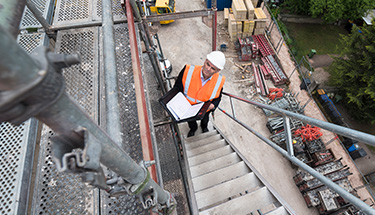
This guide explains what workers need to consider before and during work at height, including access equipment, fragile surfaces, roof work, fall protection, and safe working procedures.
Around 40% of major injuries on construction sites involve falls from height. Falls can cause serious injuries including fractures, spinal injuries, head injuries, and fatalities.
More than 50% of falls from height can result in death. Working at height must always be properly planned, supervised, and carried out using suitable equipment and safe systems of work.
Ladders and stepladders are only suitable for light work of short duration where there is a low risk of falling. They should not be used where safer access equipment is reasonably available.
Ideally, safer access equipment should be provided. This may include scaffolds, mobile towers, podium steps, mobile elevated work platforms, or properly designed working platforms.
Roof-edge barriers, scaffolds, guard-rails, and toe-boards must be erected where required to prevent people and materials falling from height.
Access ladders must extend at least one metre, or approximately five rungs, above the stepping-off point. They must also be properly secured to prevent slipping or movement.
Fragile surfaces such as asbestos cement roof sheets, fragile roof panels, and skylights must be identified with signs. Suitable measures must be taken to stop workers falling through them.
Ladders must be rested at the correct angle. The correct ratio is one unit out for every four units up.
Any fall can result in serious injury. Collective fall protection such as guard-rails, toe-boards, barriers, and working platforms should be used before relying on personal protective equipment.
Materials, tools, and waste can fall from height and injure people below. Toe-boards, debris netting, exclusion zones, and proper material handling procedures should be used.
Wet, windy, or icy weather can make work at height extremely dangerous. Weather conditions should be anticipated and suitable precautions taken before work begins.
Too much material on a working platform can restrict access, create trip hazards, and make scaffolds or platforms unstable.
Rubbish should not be allowed to accumulate. Waste should be lowered safely or removed using a chute where suitable.
Only competent operatives should be used for roofing works. Roof work can involve fragile materials, open edges, weather exposure, and difficult access.
A safe system of work must be devised and implemented where a roof could collapse under a person’s weight. A temporary platform is often used to spread the load and provide safe access.
If edge protection or a soft-landing system cannot be used, it may be necessary to use a harness and lanyard. A secure anchorage point and suitable training are required.
Bitumen boilers require a drip tray and suitable fire extinguisher. Hot works on roofs must be carefully controlled to prevent fire.
Openings must be covered or guarded. If covers or guards are removed for any reason, they should be replaced as soon as practical.
Working at height is one of the highest-risk activities on construction sites. Falls can cause life-changing injuries or fatalities, so work must be properly planned and controlled.
Ladders should only be used for light, short-duration work where the risk is low. Safer access equipment, edge protection, guard-rails, toe-boards, and suitable working platforms should be used wherever possible.
Fragile surfaces, adverse weather, falling materials, and overloaded platforms must all be considered before work starts. Employers and workers must work together to ensure safe systems are followed and falls are prevented.
Why Working at Height Safety Matters
Before Working at Height
Choose the Right Access Equipment
Use Safer Access Where Possible
Install Edge Protection
Secure Access Ladders
Identify Fragile Surfaces
Set Ladders at the Correct Angle
Common Hazards When Working at Height
Falls from Height
Falling Materials
Adverse Weather
Overloaded Working Platforms
Poor Housekeeping
Safe Working on Roofs
Use Competent Operatives
Use a Safe System of Work
Use Harnesses Only Where Necessary
Control Fire Risks
Guard or Cover Openings
Employer Responsibilities
Worker Responsibilities
Work at Height Questions for Toolbox Talks
Conclusion
Want us to call you back?
No problem, let us know your details and we will get back to you ASAP.
What would be the best time to call?
Please note these times are not guaranteed.